NEWS DETAIL
What Is PEMF Intensity? Definition, Working Principle & Core Parameters
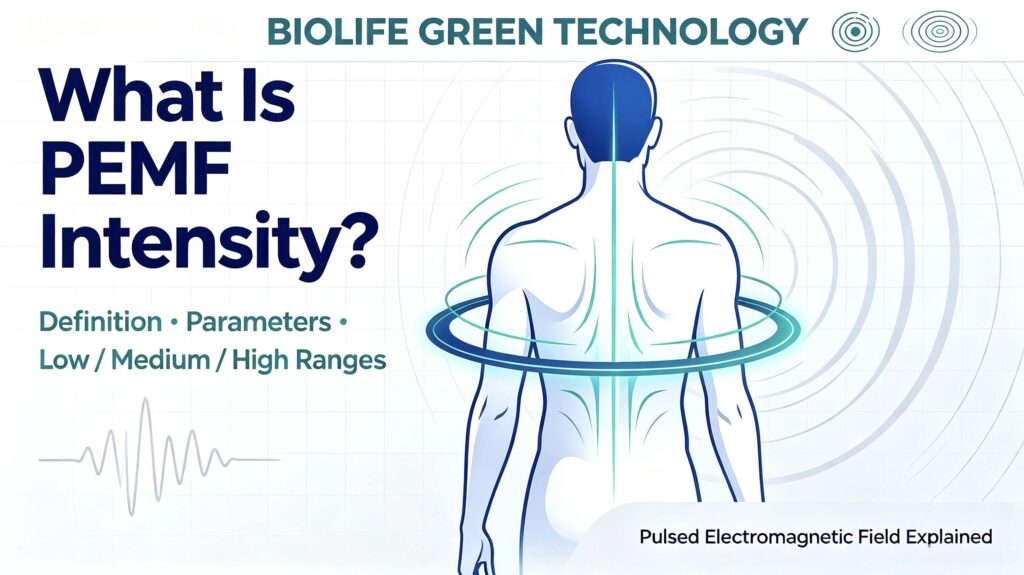
Many people exploring pulsed electromagnetic field therapy mix up two core concepts: PEMF frequency and PEMF intensity. Frequency describes how often magnetic pulses repeat. PEMF intensity defines the strength of each magnetic pulse that reaches human tissue. This single parameter controls tissue penetration depth, the type of cellular response triggered, and the suitable use cases for any PEMF device. A common pitfall when reading product specs is confusing the bare coil peak rating with the actual intensity that arrives at your skin after passing through mat padding and mineral layers.
Definition of PEMF Intensity
PEMF intensity refers to the magnitude of the pulsed magnetic field produced by the coil system. It is measured in millitesla (mT), while older wellness literature and product marketing often use Gauss for reference. The conversion rule is simple: 1 millitesla equals 10 Gauss. An important detail: magnetic field strength drops rapidly with distance. The maximum value printed on a spec sheet is almost always measured directly against the coil. Once you add fabric, foam and mineral layers of a PEMF mat, the real intensity delivered to your body is far lower than the coil’s peak rating.
How PEMF Intensity Works: Basic Biological Mechanism
Every human cell maintains a natural electrical potential across its membrane. Pulsed magnetic fields pass through skin and soft tissue and induce tiny electric currents within cells. Higher PEMF intensity creates stronger induced currents, while lower intensity delivers milder stimulation. Crucially, stronger intensity does not automatically equal better wellness outcomes. Cells respond within specific biological windows, and excessive intensity may lead to overstimulation rather than extra benefits.
A foundational peer-reviewed paper exploring how magnetic field strength modulates transmembrane ion movement — the core mechanism behind PEMF biological effects — appears in the journal Bioelectromagnetics. View study
Key Parameters That Define PEMF Intensity
Magnetic field strength in mT or Gauss is only one piece of the puzzle. When evaluating PEMF intensity, researchers and buyers must examine these paired technical metrics:
- dB/dt (Slew Rate): The rate at which the magnetic field rises and falls over time. For biological response, dB/dt is often more important than static peak mT reading. A fast rising pulse can trigger noticeable intracellular currents even with moderate peak field strength.
- Coil layout: Single coils, dual coils, or matrix coil mats produce very different field distribution. Uniform coil design ensures consistent intensity across the treatment surface.
- Pulse waveform: Square, sawtooth, or sinusoidal pulses interact with tissue differently, even when peak intensity is identical.
- Distance attenuation: Magnetic strength falls quickly as you move away from the coil. The padding thickness inside a PEMF mat directly reduces the actual intensity reaching the user’s body.
Unlike permanent magnets, which produce a fixed static magnetic field, PEMF creates a continuously cycling, time-varying magnetic field. Its magnetic strength fluctuates dynamically throughout operation. For this reason, all intensity values covered within this article refer to peak intensity, not a constant steady magnetic field.
In real-world R&D practice, all core PEMF coil parameters, including frequency and intensity, are controlled and tuned by electronic drive circuits. Designing circuitry for precise magnetic intensity regulation represents a major technical hurdle, and it acts as an important benchmark separating high-end PEMF manufacturers from basic entry-level suppliers.
This dynamic nature of pulsed electromagnetic fields and peak intensity measurement is documented in Journal of Magnetic Resonance Imaging.
Low, Medium and High PEMF Intensity Overview
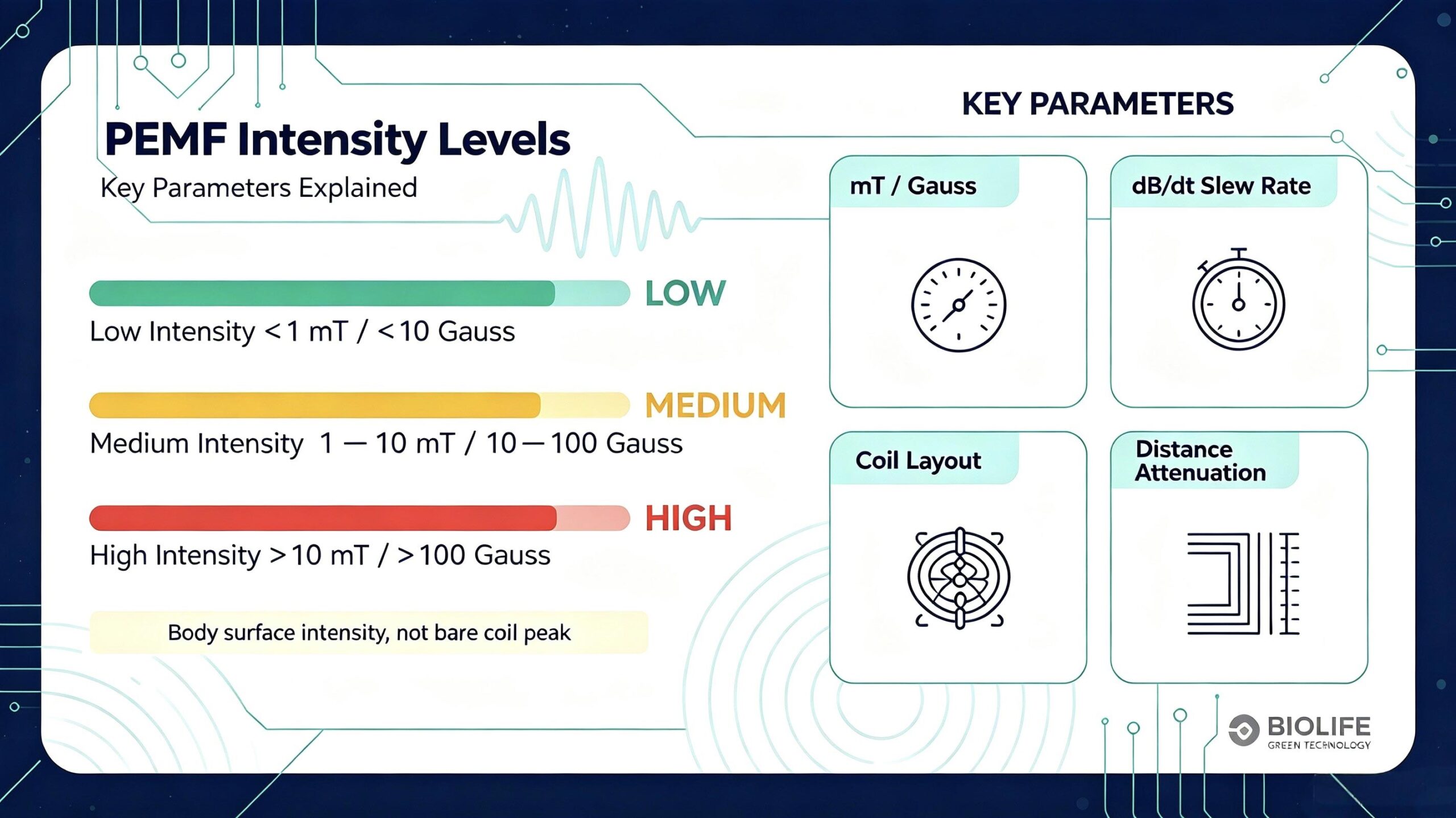
Research literature and clinical practice commonly group PEMF systems into three intensity tiers. These categories are general guidelines rather than rigid universal boundaries. The classification refers to actual intensity measured at the body surface, not bare coil peak values:
- Low intensity PEMF: Under 1 mT (less than 10 Gauss). This range covers most consumer home PEMF mats, including many systems operating around 0.15 mT (1.5 Gauss). It delivers gentle, long-duration stimulation to support cell homeostasis and daily wellness.
- Medium intensity PEMF: 1 mT to 10 mT (10 to 100 Gauss). This level delivers balanced soft tissue stimulation and is widely researched for muscle recovery and joint maintenance. The upper end of this bracket (50–100 Gauss) already counts as relatively strong for home wellness use, requiring shorter and more controlled sessions. A large meta-analysis published in Frontiers in Pain Research notes that most tissue recovery studies are conducted within this 1–10 mT window. View study
- High intensity PEMF: Above 10 mT (over 100 Gauss). Powerful pulsed fields reserved for professional, short-duration targeted protocols, and not intended for casual everyday home use.
Wrap Up
Understanding PEMF intensity helps you cut through marketing claims and select a PEMF system aligned with your wellness goals. Each intensity tier brings distinct biological effects, recommended session rules and safety considerations. We break down each range in detail in our dedicated articles: low intensity PEMF benefits for daily wellness, medium PEMF intensity for muscle and joint recovery, and a full comparison of low vs medium vs high PEMF intensity.
Disclaimer: PEMF devices are wellness tools, not medical devices. Content is for educational purposes only. Consult a healthcare provider before use if you have implanted electronics, pregnancy or serious health conditions.